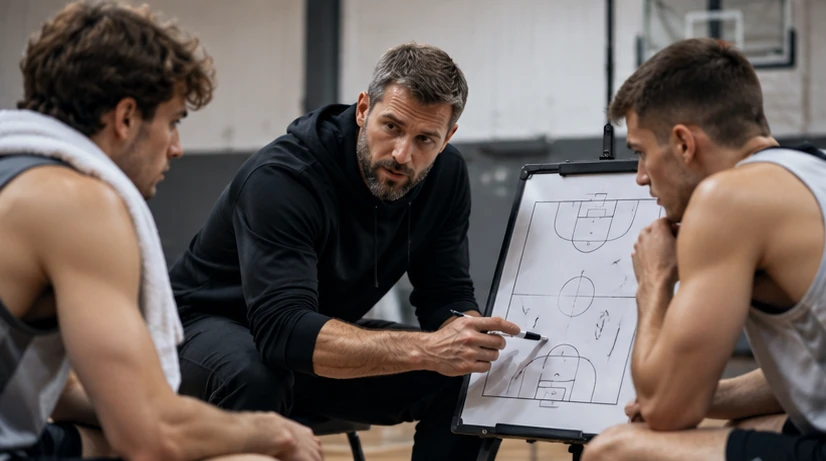
Pick-and-roll defense is a chain of choices. The on-ball defender, screener defender and weak-side helpers all need to know the coverage, the ball handler’s tendencies and where the next pass is most likely to go.
Drop coverage
The big defender retreats toward the paint while the guard fights over or through the screen. The goal is usually to protect the rim and keep the ball in front. The tradeoff is space for pull-up shooting and pocket passes if the guard defender cannot recover.
Switching
The defenders exchange assignments as the screen is set. Switching can remove the immediate advantage of the pick, but it may create a mismatch. The offense then decides whether to attack the smaller defender inside, isolate a slower big outside, or flow into another action before the defense can reset.
Blitzing or trapping
Two defenders aggressively contain the ball handler. This can force the ball out of a star creator’s hands, but it also leaves the defense playing four-on-three behind the trap. Rotations, length and anticipation are critical.
ICE or down coverage
ICE is commonly used on side pick-and-rolls. The on-ball defender tries to send the ball handler away from the screen and toward the baseline, while the big defender positions to contain the drive. The purpose is to keep the action on one side and reduce access to the middle.
There is no universal best coverage
Personnel dictates the decision. A scheme that works against a reluctant pull-up shooter may be dangerous against an elite one. Good defensive teams also change coverages by matchup, game situation and location on the floor.